
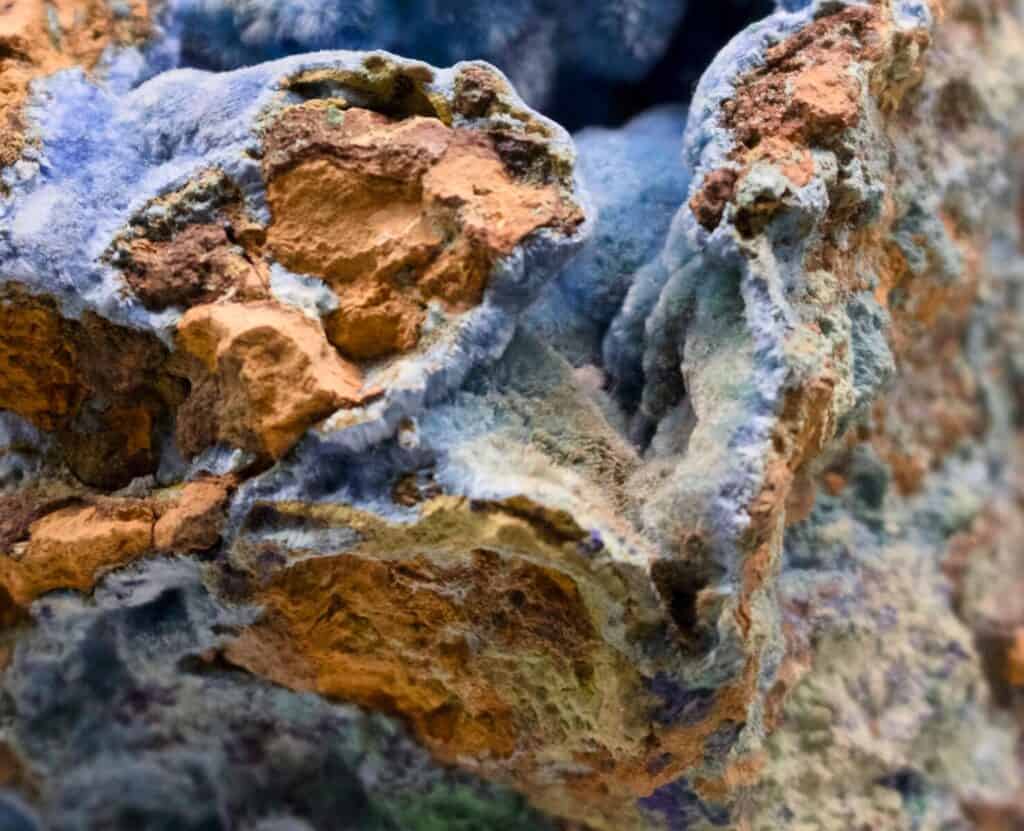
Afghanistan’s Mineral Future: From Buried Wealth to National Architecture
Afghanistan’s mineral wealth could become the foundation of long-term national prosperity, but only if institutional design turns geological assets into credible economic systems.
National Opportunity
A major untapped endowment of copper, iron ore, lithium, rare earths, and gold.
Structural Challenge
Weak institutional architecture has prevented mineral wealth from becoming durable prosperity.
Financing Pathway
Transparent licensing, sovereign revenue stewardship, and infrastructure-led development.
Afghanistan’s mineral endowment could become the basis of a new national development model, but only if licensing, sovereign revenue stewardship, and infrastructure are designed to turn buried assets into durable prosperity.
The future of Afghanistan may depend less on the minerals beneath its soil than on the quality of the institutions, structures, and ambitions built above it.
Preeti Sinha
Afghanistan’s Mineral Future: From Buried Wealth to National Architecture
For much of the modern era, Afghanistan has been interpreted through the language of conflict, fragility, and geopolitics. Yet beneath that familiar narrative lies a different national reality: one of the most underdeveloped mineral endowments in the world.
Its mountains and terrain are believed to hold significant deposits of copper, iron ore, lithium, rare earth elements, gold, and other strategic minerals. At a time when electrification, battery storage, and industrial supply-chain security are becoming central to the global economy, these resources are no longer peripheral. They sit close to the heart of the next industrial era.
But Afghanistan’s mineral story is not fundamentally about geology.
It is about whether a nation can build the institutional, financial, and infrastructural architecture required to transform buried wealth into enduring prosperity.
Natural resources on their own do not create development. In many countries, they have produced volatility, elite capture, fiscal distortion, and missed national potential. Where resource wealth has been translated into long-term strength, success has rarely come from extraction alone. It has come from design.
Three foundations matter.
The first is a transparent and credible licensing regime. Without it, capital remains short-term, speculative, or politically distorted. With it, a country can begin to attract serious long-horizon partners while protecting national interest and public legitimacy.
The second is sovereign revenue architecture. Resource wealth must be governed through institutions capable of channeling proceeds into infrastructure, education, productive systems, and long-term national reserves rather than immediate fiscal depletion. A country that extracts without stewarding simply liquidates its future.
The third is physical economic infrastructure. Mineral deposits become economically meaningful only when they are connected to power, transport, logistics, processing capacity, and regional trade routes. Without these systems, resource wealth remains stranded beneath the ground, technically valuable but nationally unrealized.
Afghanistan’s challenge has not been the absence of assets. It has been the absence of the systems required to convert those assets into broad-based development.
Yet this is precisely why the opportunity remains so large.
Because the sector is still underdeveloped, Afghanistan is not locked into a mature but failing model. It still has the possibility of first-principles design. A serious mineral strategy could serve as the anchor of a wider national blueprint, linking extraction to infrastructure investment, domestic industrial formation, and regional transport corridors connecting Central and South Asia.
This is where the question becomes larger than mining.
The deeper issue is whether Afghanistan can create a credible economic architecture above the mineral base: institutions that inspire trust, capital structures that support long-term development, and national systems that ensure resource wealth strengthens the country rather than fragments it.
Afghanistan’s mineral endowment should not be understood merely as a buried stock of commodities. It should be understood as a strategic national platform, one that could help finance infrastructure, expand industrial capacity, deepen regional integration, and reshape the economic horizon of the country.
The future of Afghanistan may depend less on the minerals beneath its soil than on the quality of the institutions, structures, and ambitions built above it.